
Why hold a Satyanarayan pooja in a hall?
The Satyanarayan pooja is performed by some families to give thanks after a wedding, a new home, a new job or simply on a purnima. Some families perform it at home, but when the guest list grows beyond what a flat can hold, or when a pooja follows a griha pravesh or vastu shanti before the new home is ready for guests, a hall gives everyone a seat, a proper view of the katha and a clean place to share prasad and a meal.
Setting up the pooja space
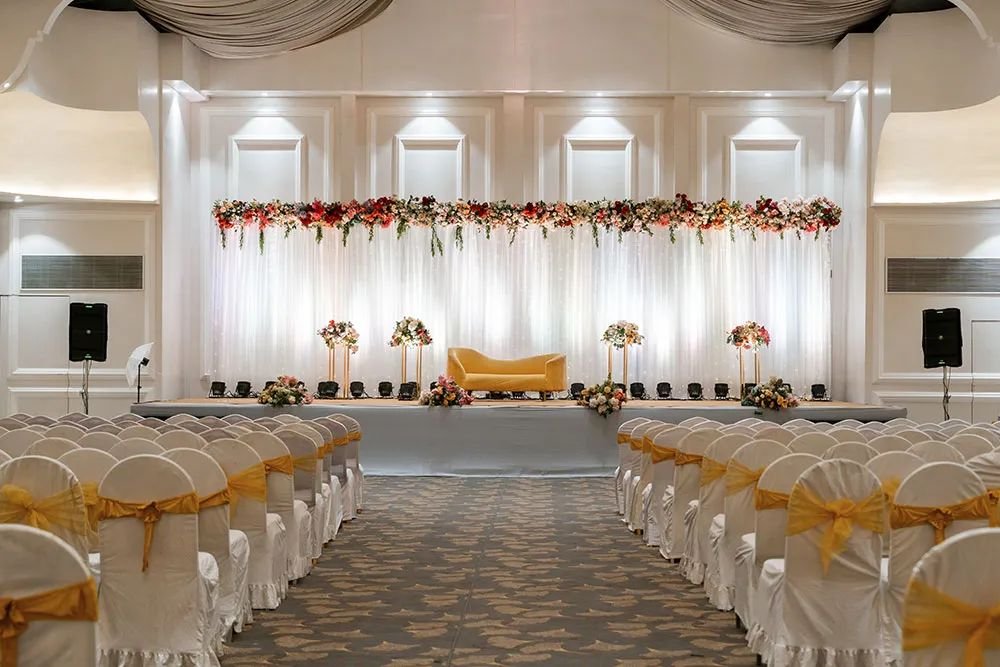
The AC banquet hall is the usual choice: a raised or clearly marked area at the front for the chowrang or pat, the kalash and the pooja items, floor seating close to it for the family performing the pooja, and chairs behind for elders and guests. Your priest will tell you what the ritual needs; share that list with us and we plan the layout around it. If your pooja includes a havan, tell us at enquiry so we can discuss where and how it can be done. The open lawn suits a larger community gathering or a bhajan sandhya on a pleasant evening.
Timing and the prasad meal
Some families choose a morning muhurat, with the katha and aarti followed by the sheera prasad and lunch; others hold the pooja in the evening, after work. Tell us the muhurat and how long your priest expects the ritual to take. If you need a satvik, no-onion-no-garlic meal or Jain options for the pooja, tell us and we tell you plainly what the kitchen can prepare; menus are shared on request through catering.
Flowers, community functions and how to enquire
Marigold torans, rangoli at the entrance and flowers around the pooja area: we plan the decor with you and confirm in writing what applies to your date; see decoration. Community and society groups also hold bhajans, kirtans and festival gatherings here. Send us the date, the muhurat and a rough guest count, or send an enquiry. Office and site visits run 9:30 AM to 8 PM, every day.