
What happens at a barsa?
In many Maharashtrian families the barsa is commonly held on the twelfth day after the baby's birth, though plenty of families choose a later date that suits the mother's recovery and the relatives' travel. The baby is placed in a decorated cradle (palna), the women of the family sing traditional cradle songs, and the paternal aunt (atya) whispers the chosen name into the baby's ear before it is announced to everyone. Other communities have their own naamkaran customs, often with a pooja or havan led by the family priest.
Why the hall suits a naming ceremony
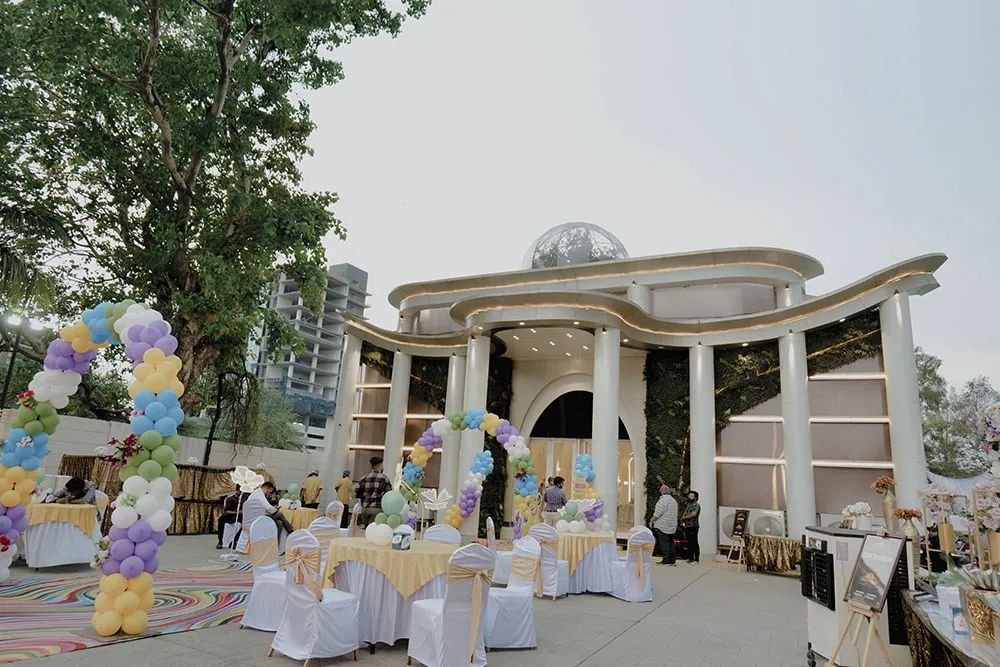
A newborn and a recovering mother need a calm, clean, air-conditioned room, which is why the AC banquet hall suits it: the cradle at the front, chairs around it for the elders, and the dining area close by. Plan a quiet corner where the mother can feed and settle the baby away from the crowd. The open lawn suits a later celebration, such as a first birthday, better than a barsa.
Timing the day around the baby
Late morning works well for most families: the ceremony and songs first, while the baby is fresh, then lunch. Keep the programme short and let the baby's routine set the pace. If your priest is performing a pooja, tell us the muhurat and how much time the ritual needs, and we plan the setup and the meal around it.
Food, decor and how to enquire
A satvik or traditional family lunch with sweets for the announcement suits a barsa; menus are shared on request through catering. For the cradle decoration and a name board for photos, we plan the decor with you and confirm in writing what applies to your date; see decoration. Celebrated a dohale jevan with us? Tell us when you send an enquiry.